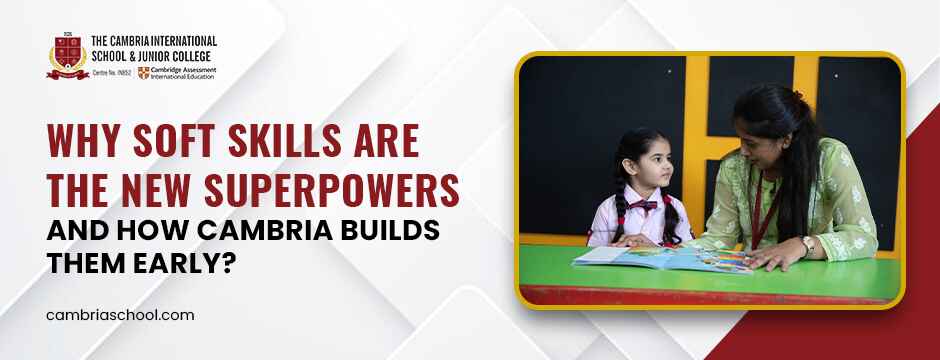
Why Soft Skills Are the New Superpowers—and How Cambria Builds Them Early?
In today’s fast-paced, hyper-connected world, success is no longer defined solely by technical knowledge or academic excellence. The landscape of education and future careers has shifted dramatically. Employers, innovators, and global leaders now emphasise human qualities that machines cannot replicate—qualities like empathy, communication, adaptability, resilience, leadership, and collaboration. These soft skills have quietly evolved into real-world superpowers, enabling individuals to face challenges, build meaningful relationships, and thrive across industries.
For children, this shift means one powerful thing: academic learning alone is no longer enough. They need to grow into confident, expressive, emotionally intelligent individuals who can navigate life’s complexities with ease. The earlier these skills are developed by the play school near me, the stronger and more natural they become. Soft skills aren’t just nice-to-have traits anymore; they are essential foundations that shape a child’s future in school, personal life, and eventually, their career. Cambria understands this transformation and has embraced a holistic, future-ready approach to learning.
Why Soft Skills Matter More Today Than Ever?
The world is evolving at lightning speed. Automation and AI now perform many traditional tasks, while the job market demands individuals who can think critically, solve problems creatively, and collaborate effectively. This reality places soft skills at the heart of long-term success.
Soft skills help children:
- Communicate clearly in an increasingly global world
- Manage emotions, build emotional stability and confidence
- Adapt quickly to change and uncertainty
- Solve problems with creativity and clarity
- Work well with others, developing teamwork and social intelligence
- Demonstrate leadership, even in simple everyday moments
These qualities are essential not just for careers, but for life. Whether a child is facing a group project, adjusting to social dynamics, or handling setbacks, soft skills shape how they respond, learn, and grow.
The Rise of Emotional Intelligence (EQ) Over Traditional Metrics
While academic excellence remains important, emotional intelligence has become an equally powerful predictor of success. Studies show that individuals with strong EQ often outperform others—not because they are the smartest in the room, but because they understand feelings, build better connections, and stay level-headed during challenges.
For children, EQ is developed through daily interactions, guided reflection, and hands-on experiences. The play school near me that focuses solely on academics miss the opportunity to build these essential traits early. A future-ready educational model must integrate emotional and interpersonal learning into every aspect of school life.
Soft Skills as Superpowers for the Future
Soft skills truly function like superpowers because they influence multiple areas simultaneously:
Communication: The Power to Influence and Express
Children who communicate well can share ideas, ask questions confidently, and form strong relationships. This skill becomes vital in leadership roles, presentations, teamwork, and overall social success.
Collaboration: Building Stronger Together
Teamwork teaches patience, understanding, and shared responsibility. Collaborative children grow into adults who can thrive in diverse workplaces.
Creativity and Critical Thinking: Seeing Beyond the Obvious
Problem-solving, innovation, and out-of-the-box thinking are essential for tomorrow’s careers. Creative thinking allows children to turn challenges into opportunities.
Adaptability and Resilience: Thriving in a Changing World
Life rarely goes exactly as planned. Children who learn resilience in an international preschool early grow into individuals who handle uncertainty with calm and confidence.
Leadership: Taking Initiative at Any Age
Leadership isn’t about authority—it’s about responsibility, empathy, and decision-making. When children are encouraged to lead, they learn self-belief and initiative.
How does Cambria build these Superpowers from an Early Age?
Cambria takes a modern, holistic approach to education—one that goes beyond textbooks and traditional assessments. Their environment is intentionally designed to help children develop confidence, creativity, empathy, and communication through practical, real-world experiences.
Here’s how Cambria nurtures soft skills in young learners:
Learning Through Exploration and Inquiry
Children are naturally curious. Cambria channels this curiosity through activities that encourage questions, discussions, and hands-on learning—helping children develop critical thinking and problem-solving skills effortlessly.
Team-Based Projects and Collaborative Activities
Group activities help students learn to listen, negotiate, share responsibilities, and respect different perspectives. These experiences gradually strengthen empathy and cooperation.
Daily Communication-Focused Routines
From class discussions to storytelling sessions, Cambria integrates communication into everyday learning. Children become confident speakers while also learning active listening—a key component of emotional intelligence.
Exposure to Arts, Music, Drama, and Creativity
Creative arts act as powerful tools to build imagination, self-expression, emotional balance, and confidence. Cambria ensures every child is given multiple platforms to express their personality and ideas.
Emphasis on Emotional Well-Being
Cambria provides an environment where children feel safe, valued, and supported. Teachers guide children through emotional experiences, helping them recognise feelings and respond with maturity.
Leadership Opportunities at Every Stage
Whether it’s leading classroom teams, presenting group findings, or helping peers, children learn initiative and decision-making naturally through structured leadership roles.
Parent-Teacher Partnerships
The best preschool near me works closely with parents to maintain consistency between home and school, ensuring that soft skills are reinforced in daily routines and interactions.
The Long-Term Impact of Early Soft Skill Development
Soft skills learned early leave a lifelong impact. Children become:
- More confident and expressive
- Better problem-solvers
- Emotionally balanced
- Strong team players
- Adaptable learners
- Capable future leaders
These qualities stay with them through school, college, and their professional journey. As the world becomes increasingly dynamic and competitive, these traits become the key differentiators that set them apart.
End Notes
Soft skills are no longer optional—they are the new superpowers that shape a child’s future success, happiness, and adaptability in an ever-evolving world. While academic knowledge builds a foundation, it is emotional intelligence, communication, creativity, and collaboration that truly equip children to lead and thrive.
The Cambria International School recognises this shift and has created an environment where soft skills are built naturally through exploration, creativity, communication, and enriched learning experiences. By nurturing these traits early, our play school near me help children grow into confident, thoughtful, resilient individuals ready to face tomorrow’s challenges.